How to Make a Photo Essay
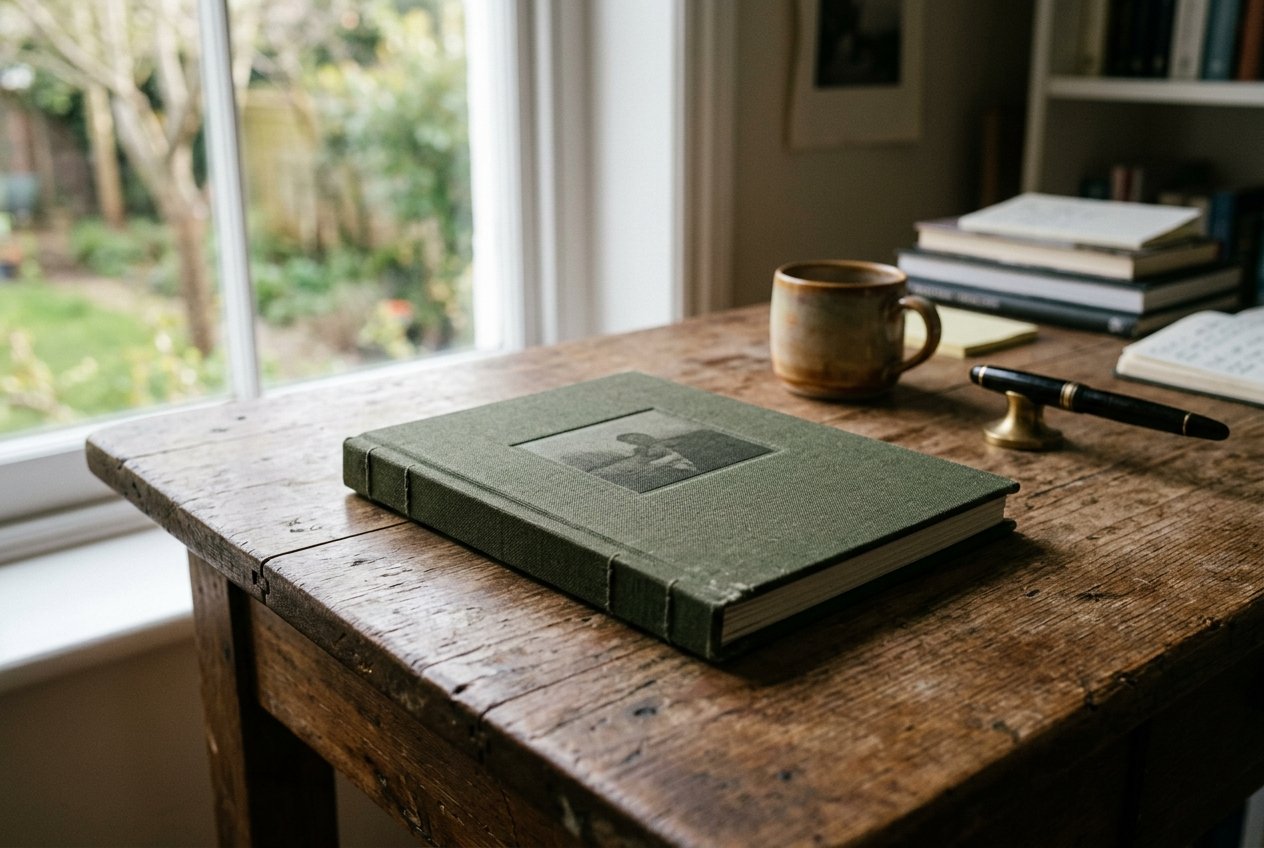
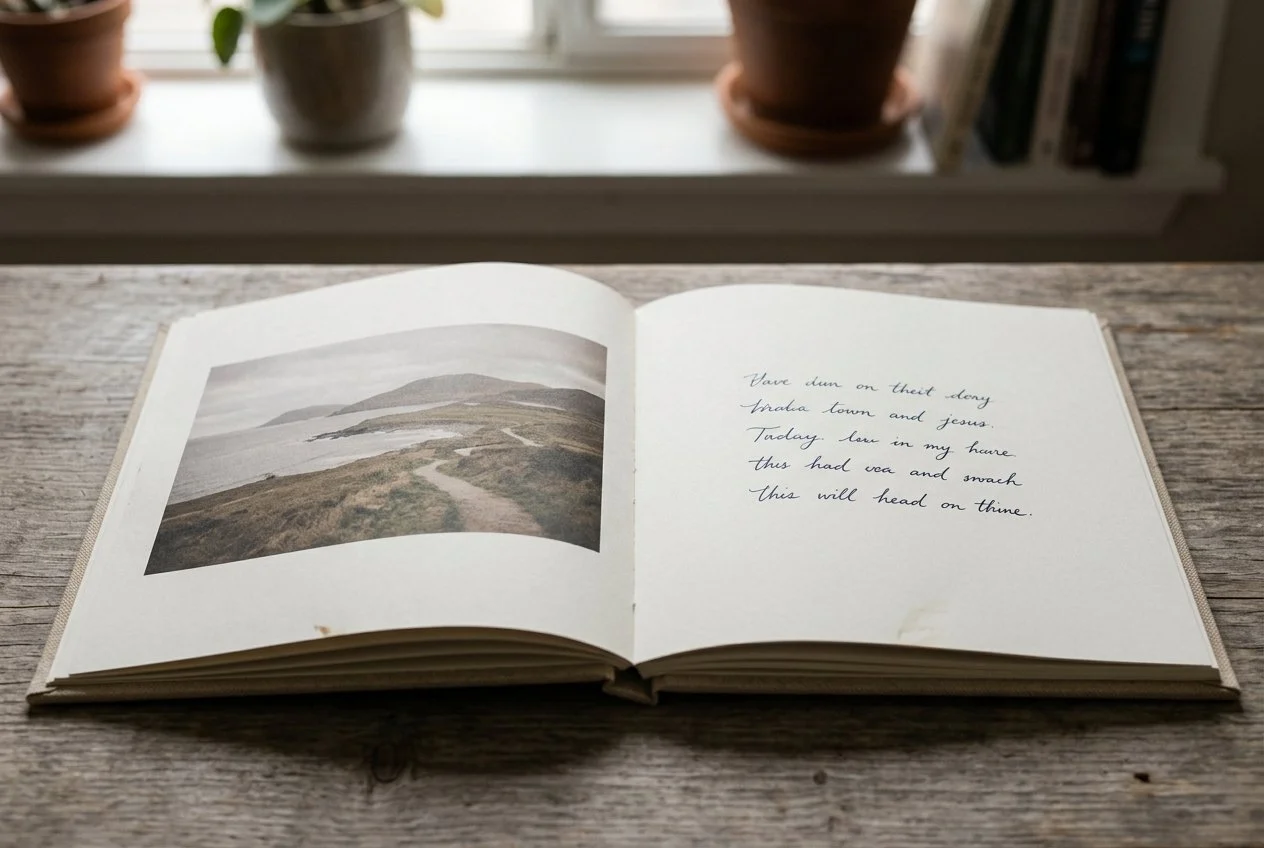
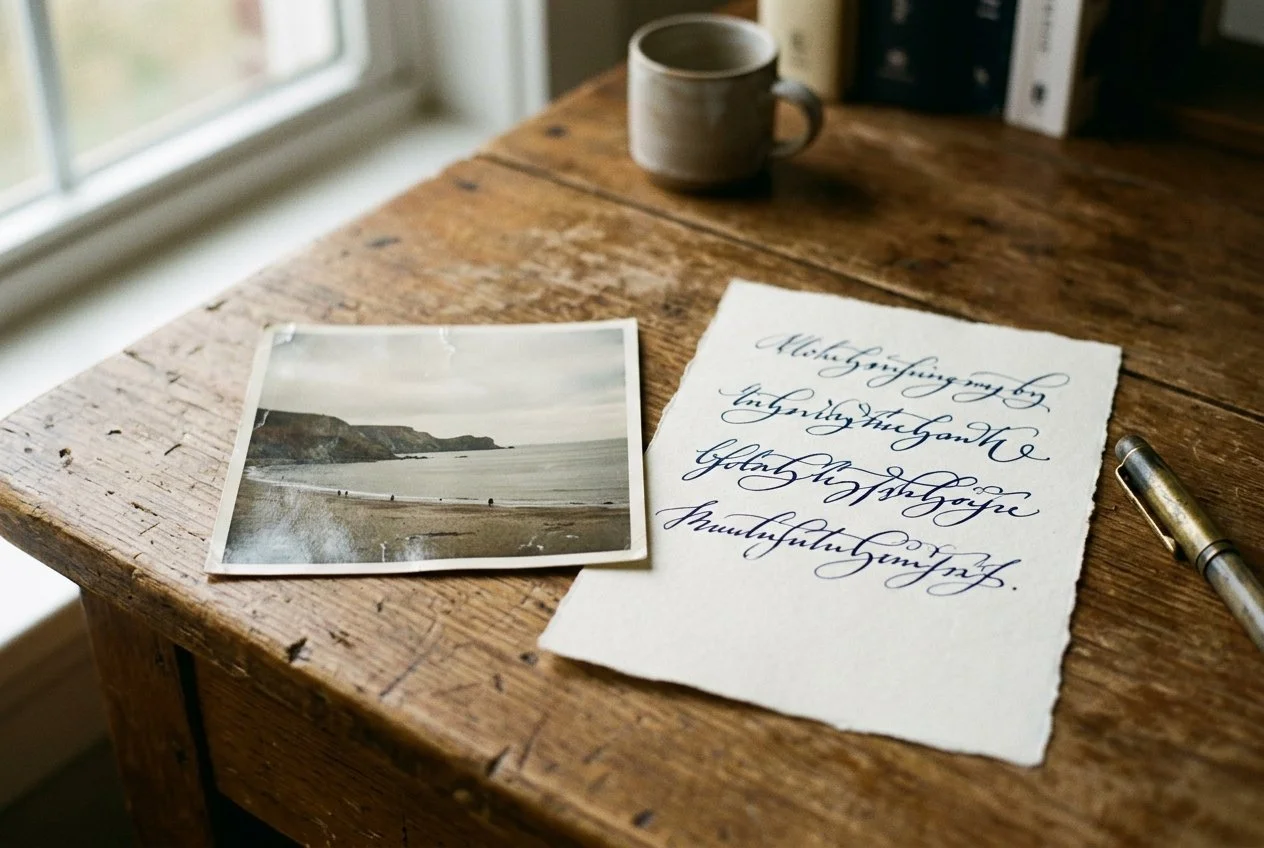
A photo essay sets a photograph and a piece of writing side by side, one to a page, so that together they can say what neither could alone.
A single photograph on the left, a few lines on the right.
Lately I spend my afternoons laying out pages this way — choosing photographs, changing their order, cutting the writing back down by half.
I first stumbled on the form a few years ago.
Coming home each late autumn from the place I grew up, I would send family a few photographs with a line of description, and one day it struck me: if the photograph carries one side, the writing only has to carry half.
That small realization became my first photo essay.
I call this "how to make one," but there is no correct answer — only an order I have learned in my hands across a few books.
What is a photo essay?
First, clear away one misunderstanding.
A photo essay is not a photograph with a caption.
Writing the date and place beneath an image is a caption.
The writing in a photo essay does not explain the photograph.
It leaves alone what the image already shows and points instead to what the image leaves unsaid.
If the picture and the words say the same thing twice, one of them is wasted.
If there is a sunset in the frame and the text also says "the sunset was beautiful," the words are only an echo.
When the two say different things, a third thing rises in the space between them.
That third thing is what a photo essay is after — not the picture, not the words, but the air between them.
A photo essay that works sends you back to the photograph: the words change your eyes, and you look at the same image once more.
Choose the photographs first
I begin with the photographs, not the words.
If you decide what you want to say and then hunt for a picture to fit it, the photograph becomes an illustration and loses its own voice.
So I reverse the order.
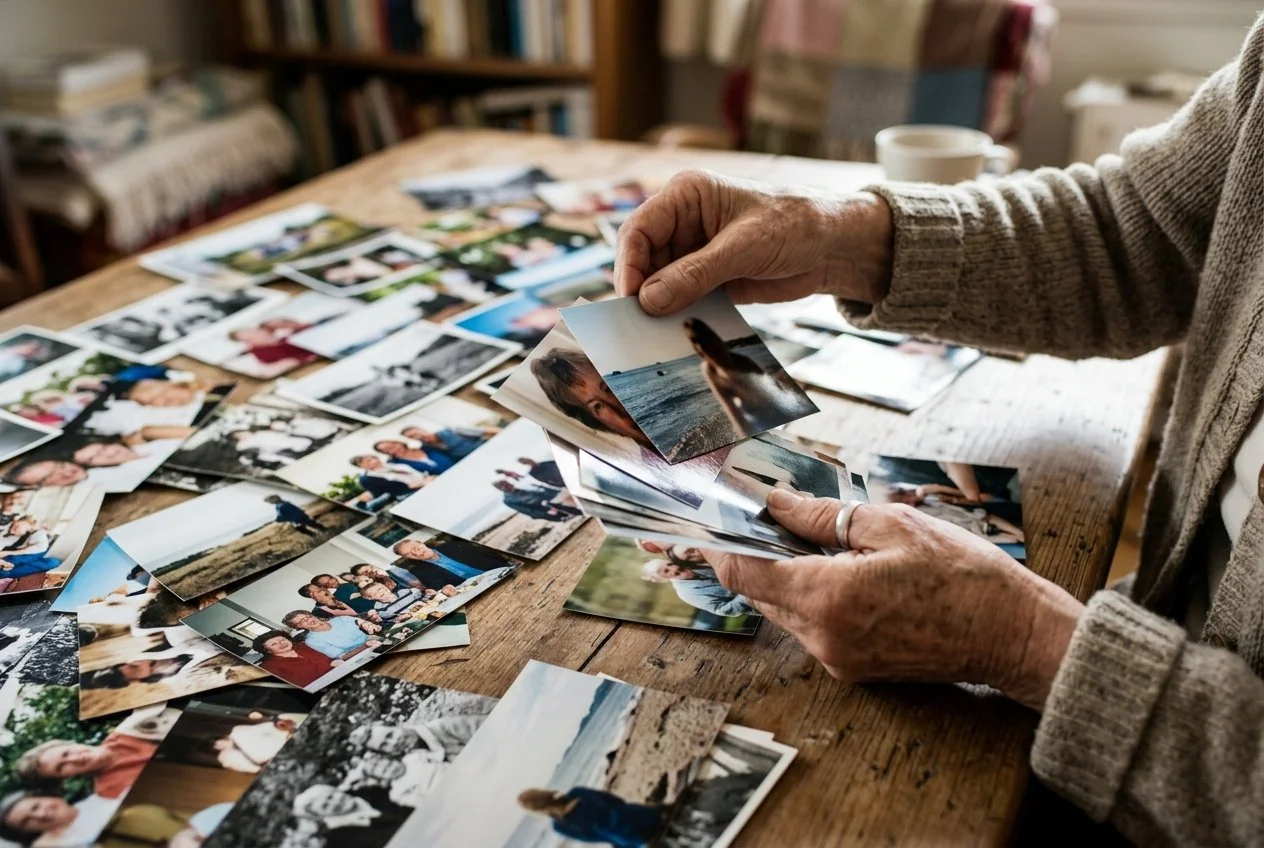
I spread out the photographs I already have and choose the ones that could become a story.
Shooting many and keeping few repeats itself here too.
A book holds fewer photographs than you would think — forty or so make one.
As I cut hundreds down to that, what I wanted to say slowly surfaces.
I do not decide and then choose; I find out by choosing.
The photograph speaks first, and the words answer late.
Sometimes an unexpected pair appears — two pictures shot separately, set side by side, and a story grows that was in neither.
When you find such a pair, the words come on their own.
Let the words carry only half
The writing should be short.
The photograph already carries half, so if you pack the words in too, the page cannot breathe.
I always cut what I have written down by half.
I delete the explaining sentences first, then the ones that try to nail down a feeling.
What remains is a few quiet lines pointing somewhere off to the side.
Then comes order.
Which photograph goes before which changes the story the same pictures tell.
I linger longest over the first page and the last.
The rhythm of turning, the gap between facing pages, the space left blank — all of it is part of the writing.
On paper, even silence takes up a page.
Honestly, I still cannot say I know this form well.
I have been photographing, and making images with AI, for barely two years, and a few photo essays are all I have bound.
I am not someone who has everything figured out and ties it off neatly.
But I keep making them, because I love the moment of setting one photograph beside one line of writing.
Even when no one notices, once a finished book rests in my hand I feel I have lived that stretch of time properly.
How to do it well I am still learning — and this piece, too, is one step left along the way.