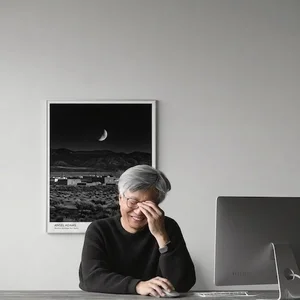
How a daily practice changes what I notice
Adapted from “하루에 한 편,” first published in Korean on Brunch on August 22, 2026. Updated October 28, 2026.
When I was a child, my siblings and I used to wait by the door for the newspaper. We wanted to be the first to read the four-panel cartoon in the Dong-A Ilbo. I wondered how anyone could think of something different every day. Years later, I read that the strip had run for more than 14,000 instalments, moving between newspapers. As a child, I thought that was a matter of talent. Now I wonder what the cartoonist did on an ordinary day, when nothing much had happened and there was still a space to fill.
I have been writing at least one piece a day for a while now. The habit grew without much planning. After a few days, I did not want to break the run, so I wrote another. Then another. Momentum has done some of the work that I might otherwise have called discipline.
There is a cost. A piece sent out today cannot have the extra days it might need. I notice awkward sentences after publication, or find a passage I wish I had stayed with longer. I would sometimes write better if I wrote less. I know that, and I keep going.
The daily practice has changed what I notice. An overheard remark, the colour of a wall, a memory of walking with a camera: something small can be enough to begin. I find material while making images, looking through photobooks, or riding in a car. When there is a place for these observations to go, I start paying attention to things I would once have passed by.
It also makes the limits of my knowledge obvious. If I write only what I already know, I run out in three or four days. Then I have to look something up, read, and learn. For forty years in the laboratory, I was used to learning first and writing afterwards. Now the writing often comes first. I begin, discover what I do not know, and go looking. That order suits me more and more.
Writing every day brings me back to the philosophy of art, aesthetics, the histories of photography and art, cameras, and my own field of research. It gives me a reason to revisit these subjects, a little at a time.
I make the task manageable by staying close to two subjects: photography and making images with AI. Exhibitions, books, and memories of the laboratory find their way in through those subjects. The narrowness has two effects. It makes me exhaust what I know sooner, but it also saves me from having to choose among everything in the world. If anything could be my subject, I could spend the whole day deciding where to begin.
On some days, hours at the desk leave me with three lines. On others, I force an ending and remain unhappy with it. I publish those pieces too. I have stopped often enough to know how difficult it can be to start again. A missed day makes the next one feel as though I owe two pieces. Two days become three. The daily rule gives me a way to continue through the unsatisfactory days.
I have also written about leaving an image alone when I cannot find words for it, and returning the next day. I still do that when I can. But there are days when I need something to publish before the difficulty is resolved. Waiting and continuing both have a place in the work.
Sometimes a piece changes what I do next. I once wrote that an image which agrees perfectly with the words beside it may be doing no more than confirming them. Afterwards, I began choosing images differently. I had been making several to accompany each text. Now I use one at the top. I still generate several, but I choose one and discard the rest. Writing about the relationship between words and images changed how I worked with them.
When I first wrote this essay in August, the series had reached number ninety. As of October 28, 2026, the series is nearing 160 pieces. Individually, the pieces never seemed like very much. Read together, they show what has kept drawing my attention. I return to subjects after months away. I find places where my thinking has changed. What began as the task of putting out one piece each day has become a record of the direction I am taking.