Ways of Seeing, Again
John Berger, a blue carpet, and the averages AI keeps showing us

Reading Morgan Housel's The Art of Spending Money recently, I found myself nodding at one scene. A man who had been nearly blind all his life regains his sight through surgery and is walking out of the ward. In the waiting room, the fact that the carpet on the floor was blue — that alone overwhelmed him, and he cried out. It was the first color he had ever seen. And the other patients sitting nearby never gave that blue carpet a single glance. Same carpet, same color. For one person, a discovery that filled his chest; for the others, just a floor to walk across. What we come to see is decided less by our eyesight than by the road we have walked.
The first sentence of John Berger's Ways of Seeing comes to mind: "Seeing comes before words." A child meets the world before it learns to speak. It sounds too obvious — and the longer you chew on it, the deeper it goes. We take seeing utterly for granted. Open your eyes, we believe, and the world simply appears. But what lodges in the heart and what slides past without a trace is never decided by itself.
Berger's point was that our way of seeing is not something we are born with but something we learn. The same painting reads differently in a different era, or from a different position in life. We do not see purely; we see as we were taught. Even the standard by which we call one thing beautiful and let another pass — we did not choose it. We inherited it. What one age revered, the next finds quaint; what one culture treasures, another finds strange.

Berger also said that images carry power. In the old oil paintings, the woman is usually placed to be seen, and the one doing the seeing is always somewhere outside the frame. Men look; women are looked at — so he wrote. That old arrangement only grows sharper in today's advertising. Ads keep nudging you to feel that the person you are now is not quite enough, and whisper that the lack can be filled by buying something. Idle looking quietly becomes the work of desire. Which raises the question: this sense of mine that something is beautiful — is it really mine?
Those questions were demanding answers from me. I had believed I saw things as they are. But looking back, my field of vision was carpeted with a lifetime of habits and biases. The things I casually found pretty, the things I dismissed as nothing. Whether those judgments were ever mine, or merely handed down to me, I have had to go back and ask.
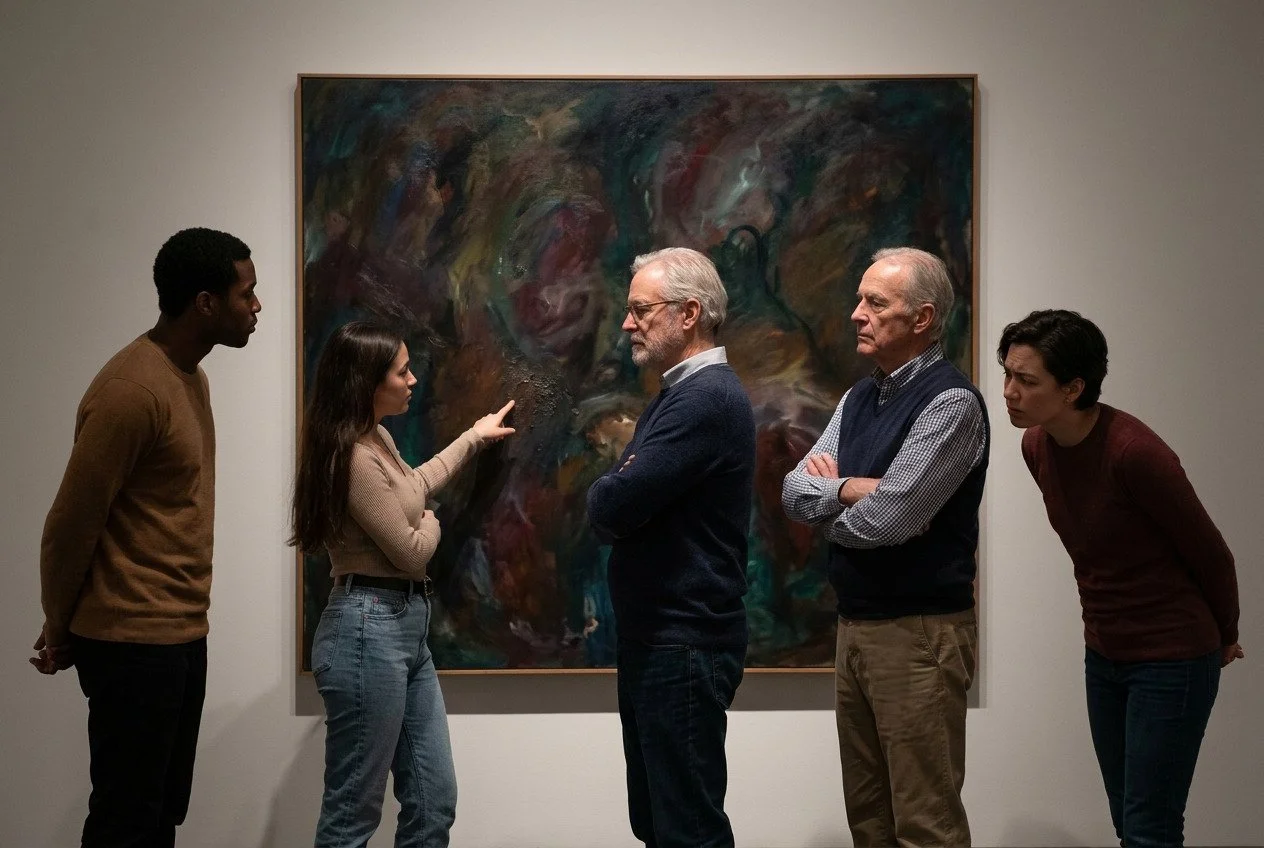
Making images with AI, the thought grows heavier. AI has learned, wholesale, the ways humanity has looked at the world. So its output carries not only our tastes but our prejudices, intact. What counts as beautiful. Who gets to be the default. That is why, these days, I start pruning the stock phrases at the prompt stage, and go back over each finished image asking how much cliché still clings to it. The plausible first image AI hands you is, more often than not, the average of what people have looked at most. If I stop there, all I have done is copy the average one more time.
To see by way of AI, then, is also to retrace how humanity has seen. You can follow that way of seeing faithfully, or you can bend it on purpose. What Berger left us was never an answer but a question: this way I am seeing right now — is it mine? That one question is the first step off the average.
If seeing is learned, it can be learned again. I am only now relearning how to see, from the beginning. Late — but for that very reason, able at last to doubt the gaze I inherited. Like the man who saw the blue carpet for the first time, I want to look at what I have always walked over as if I had never seen it before.