The Photographs She Never Showed
Vivian Maier's hundred thousand negatives, and the order of shooting and showing
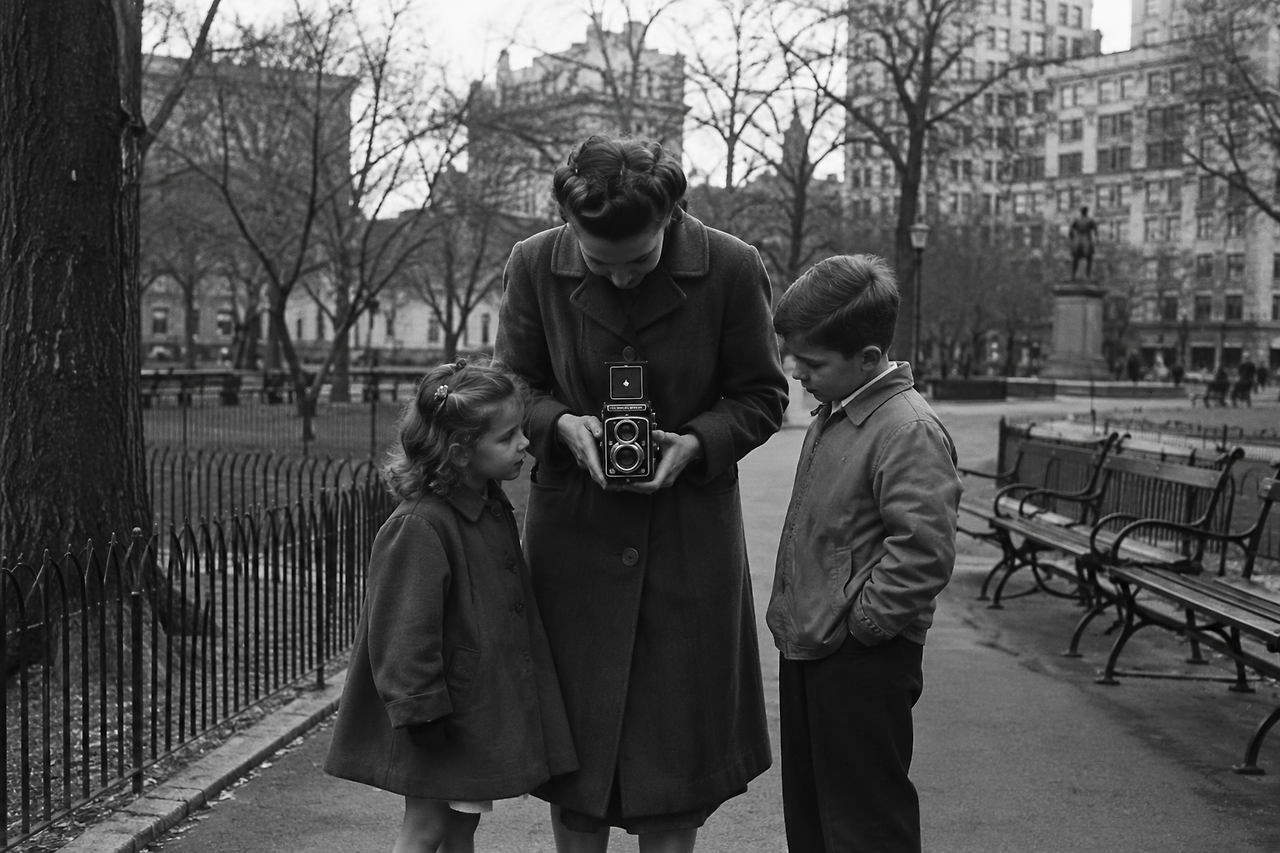
A park in Chicago, sometime in the 1950s. A nanny out with two children stops walking. She holds the boxy camera hanging from her neck at waist height, looks down into it, steadies her breath for a moment — click. The children wait beside her as if this happens all the time. No one passing by pays the moment any attention. And that day, again, the world gained a few more photographs that no one would ever be shown.
Vivian Maier. I have written about her once before, in my Korean series — the woman who photographed herself in shop-window reflections all her life and never showed the pictures to anyone. That day I was too busy with the reflections to stay with her long. Today is the story that comes after: how those photographs finally reached the world. On her days off she walked the streets with her camera, and the frames she took number more than a hundred thousand. Rolls of film she never printed — many never even developed — piled up in boxes in her room. No exhibitions. No publications. To the children she looked after, she was not a photographer at all. She was simply the slightly odd nanny who always had a camera around her neck.
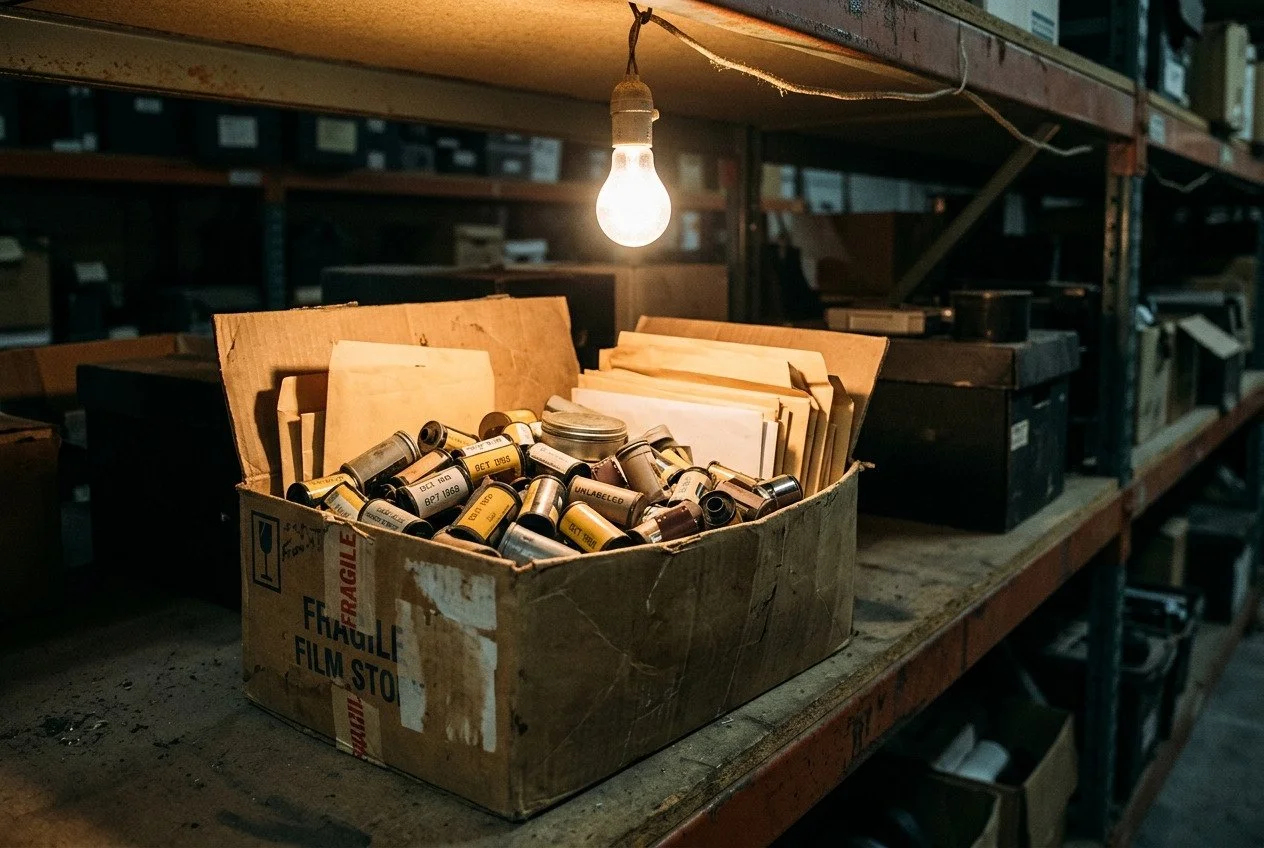
In 2007, the contents of a storage unit with unpaid fees went to auction. A young man researching the history of his neighborhood bought an old box full of photographs for next to nothing. When he began scanning them, he was startled: these pictures, taken by a nameless nanny, were simply, unaccountably good. He tracked down the name of the box's owner, and when he finally typed it into a search bar, what came up on the screen was an obituary — posted just days before. Discovery and farewell missed each other by days. She never saw her photographs enter the world. The exhibitions came after her death, then the books, and now hers is a name no account of twentieth-century street photography can leave out.
Her camera lived at her waist, not at her eye. Instead of raising a viewfinder to her face, she bowed her head and looked down into it. From the side of the person being photographed, no one is aiming anything at you — there is only a woman standing there with her head lowered. Is that why the people in her photographs are so strikingly unguarded? The gentleman in his fedora, the woman hugging a paper grocery bag, the child who has just stopped crying — each face caught exactly as it was. The camera that never met their eyes is what protected those faces.
Why she never showed them — I asked that in that earlier essay, and there is still no answer. There is no one left to ask. So what caught me this time was not the reason but the order. With no one watching, she kept photographing. For decades. Without a single round of applause. Whatever her motive was, in front of that constancy every interpretation falls silent for a moment.
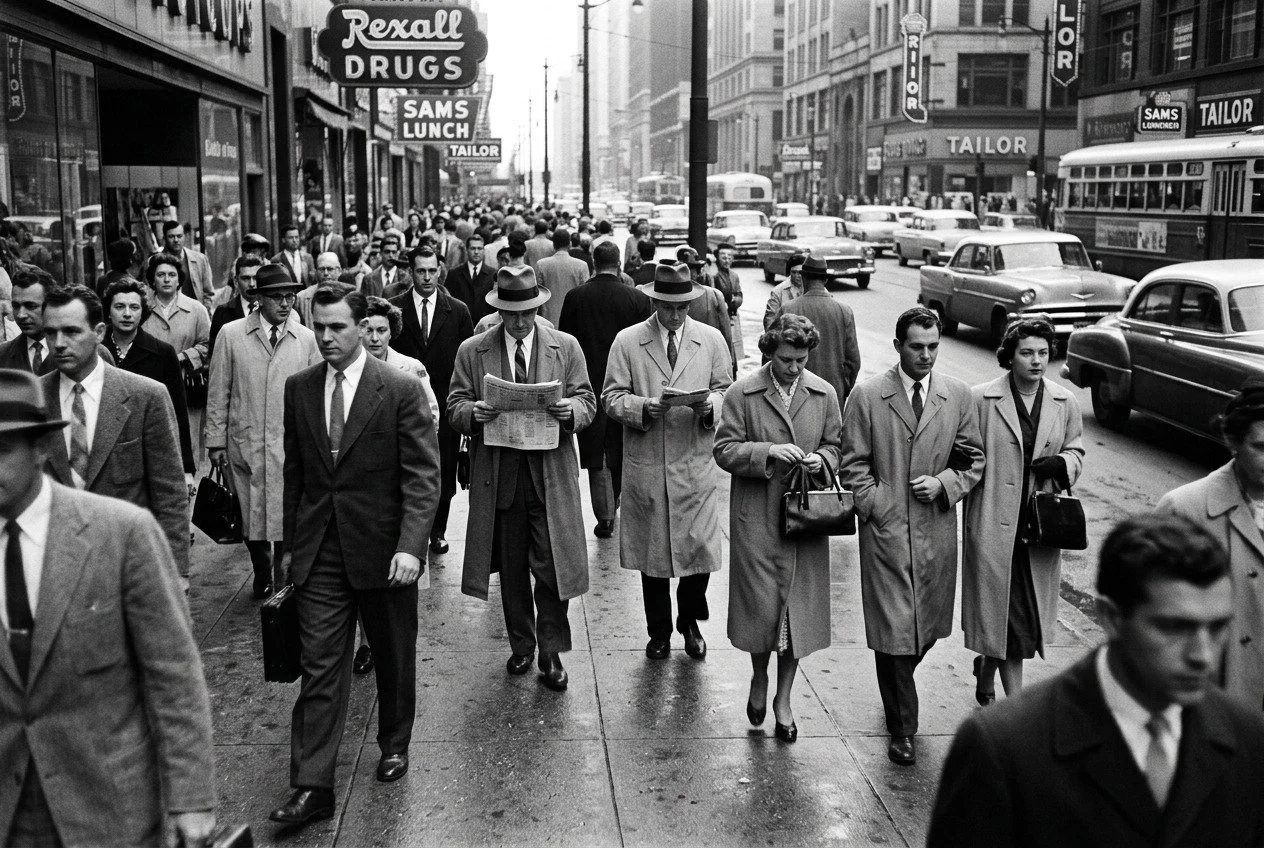
I live in the reverse of her age. What I shoot I can post at once, and once posted, someone sees it. I am the proof myself: I have published more than forty essays in a row, and released photographs and images almost as fast as I could make them. And so I catch it sometimes — the calculus of showing already in place before I shoot. Is this scene worth posting? The reckoning arrives half a beat ahead of the shutter. In those moments the grammar of display stands in front, and my own eye follows behind it.
For whom do I photograph? Maier's boxes turn the question upside down. Seen by no one, her photographs were already photographs. Perhaps the act completed itself inside her at the instant of the click. This is not to say that showing is worthless — her pictures reached us at all only because they were finally shown. But it makes me think about the order of things. First photograph for yourself; showing comes after. Reverse the order, and the same photograph becomes a different photograph.
These days I deliberately hold back most of what I shoot, storing it away on a separate disk instead of posting it. Not because the pictures are poor. It is because I suspect I need a generous store of photographs no one will ever see — to keep from forgetting that the reason I photograph begins with me, not with other people's eyes. Her hundred thousand sheets in their drawers taught me that.