The Stranger's Eye
Robert Frank's The Americans, and learning to shoot true rather than well
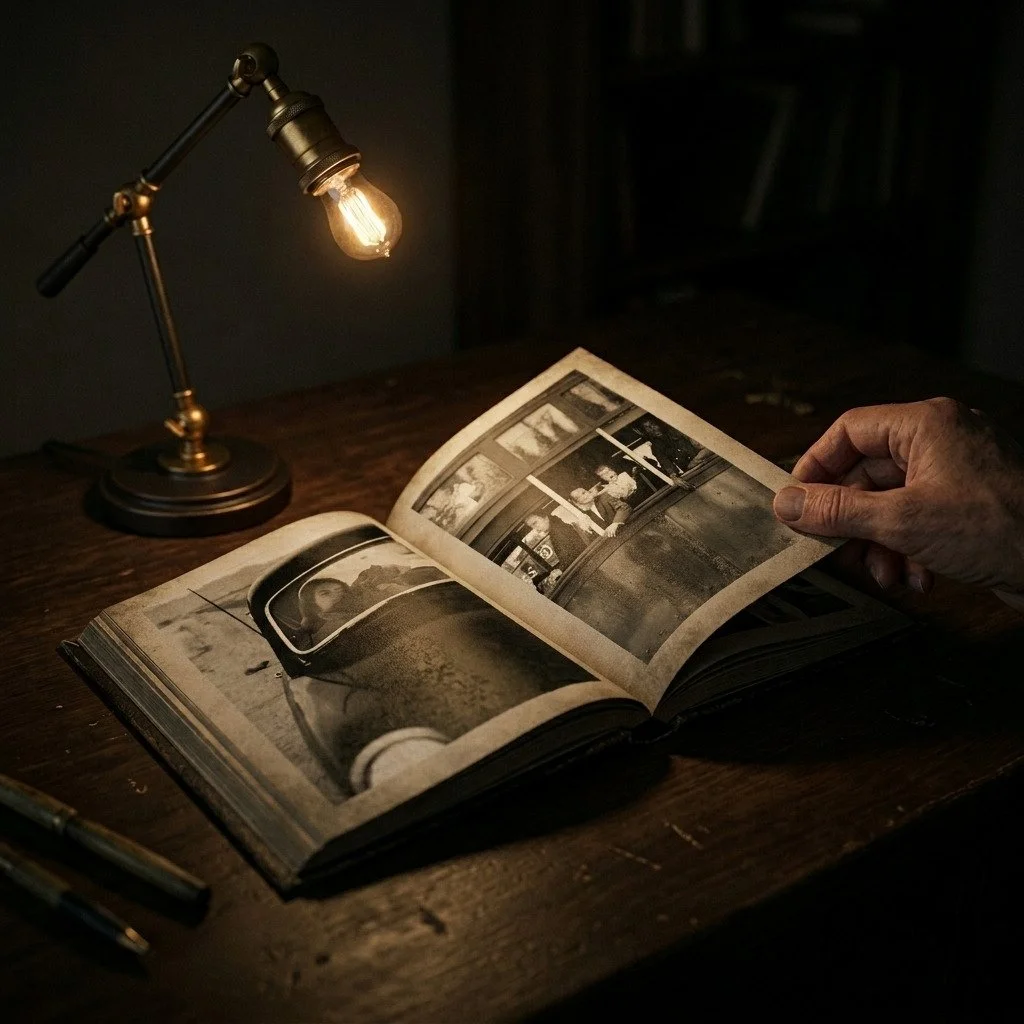
In early 2024, when I began photographing in earnest, I hunted down the classic photobooks. Walker Evans, Cartier-Bresson, and Robert Frank. The first two were immaculate. But Frank's The Americans was something else. Blurred, tilted, rough. At first I looked only at the famous frames. Then I found myself turning the pages one by one, again and again, the way you watch a film. These were not well-made photographs. And yet their imperfection, their strangeness, held me longer than anything else on the shelf.
I spent my working life in science. For nearly forty years I wrote papers in the life sciences, chasing clarity and precision almost as a faith. Anything blurred, anything shaken, was a failure. When I took up photography, the habit came with me. Sharpness, composition, exposure — everything had to be perfect. To a person like that, Frank put the question straight: between a well-made photograph and a shaken one that hits you in the chest, which is the true one?
What Frank captured was not the perfect moment but feeling, and the roughness of the real. Where Walker Evans, his contemporary, aimed for a transparent and objective record, Frank laid his own alienation and loneliness on the page. Not objectivity but a point of view. Not a record but a gaze. By the time I closed the book, something in me had quietly given way. The blur is all right. The coarse grain is all right. More than all right — they carry emotion with greater force.
The book taught me one more thing. Taken singly, Frank's photographs can look weak. But turn all eighty-three in sequence and something rises that no single frame contains. Loneliness, tedium, a strange sorrow, accumulating in the flow. Only then did I understand: a photograph is not a trophy. It is one measure in a longer piece of music.
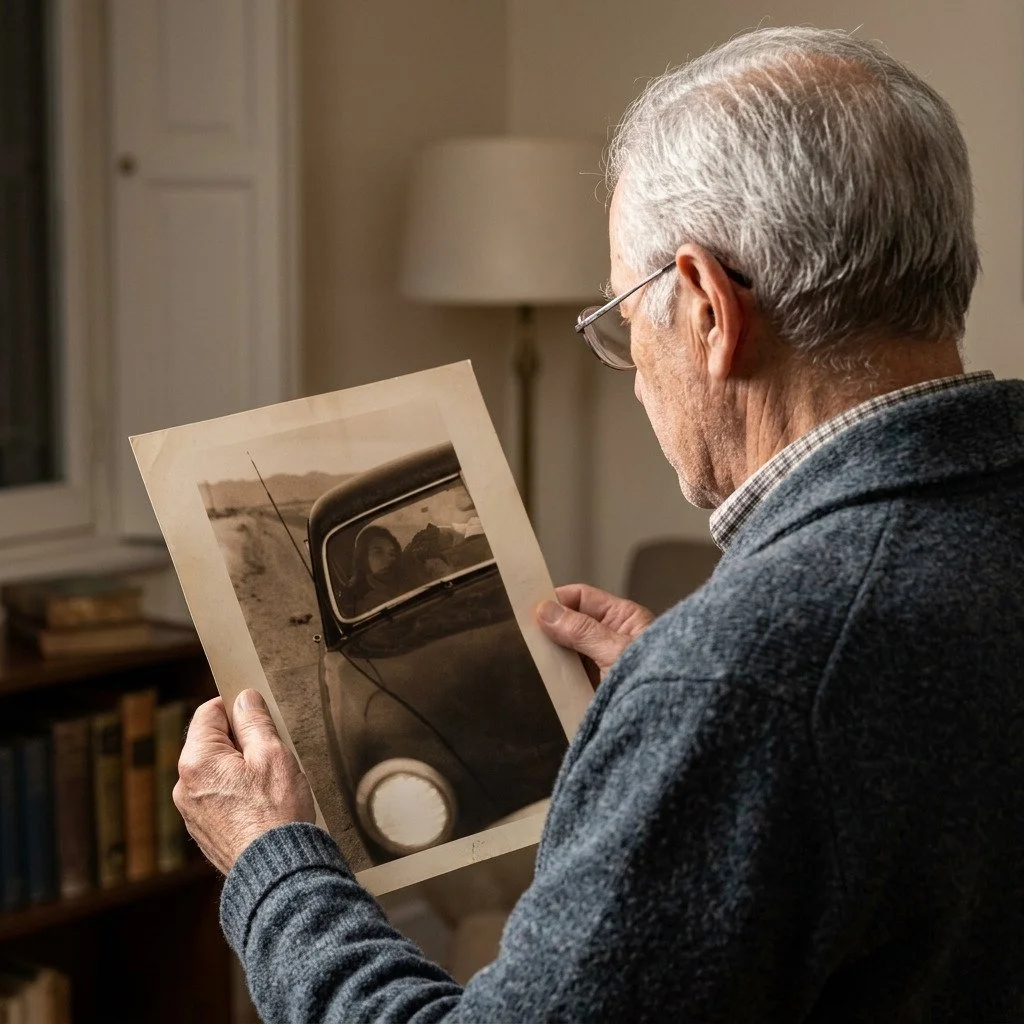
Frank was an immigrant from Switzerland. He saw America not from inside but from outside. What an insider would have walked past — the loneliness of a jukebox, the hollowness of a family seated in a car, the line where the races were divided — the stranger's eye caught and kept. Nothing was familiar to him, so everything looked new, and he saw it the deeper for that.
Unlike most readers, I keep returning to two photographs. One is Trolley — New Orleans. The streetcar's windows divide the frame into panes, and in them white passengers and Black passengers sit in their separate places. An era of segregation compressed into one exposure. Standing before that picture, I remembered my own years in America. In New Orleans I rode the streetcar down to Canal Street. On the surface all was calm, but the white families lived on the higher ground and the Black families on the low ground — and years later, when the hurricane came, it was the low ground the water swallowed first. The boundary I had only dimly sensed while living there was sharp and unmistakable in Frank's one frame. What the stranger's eye saw at once, I recognized only long afterward.
The other is the photograph of a family in a car, half caught at the edge of the frame. It is not a photograph of social protest. Just a family on the road. But I linger there every time. In my American years I too loaded my family into a car and drove — Texas to Philadelphia, Texas to San Francisco. I would take one route going and another coming back, two or three days of driving each way, so we crossed a great many of America's roads. We cooked rice in a rice cooker in motel rooms and pulled into rest stops to eat it with the side dishes we had packed. We were poor and worn out, and we had our dreams. Frank's one car brings that whole life back to me.
As a stranger who had come over from Korea, I understood that eye in my bones. Enter a society whose language you barely speak, and everything looks new. Reading anthropology in those days, I imagined it constantly: the person standing in a strange place for the first time sees what the native no longer can.
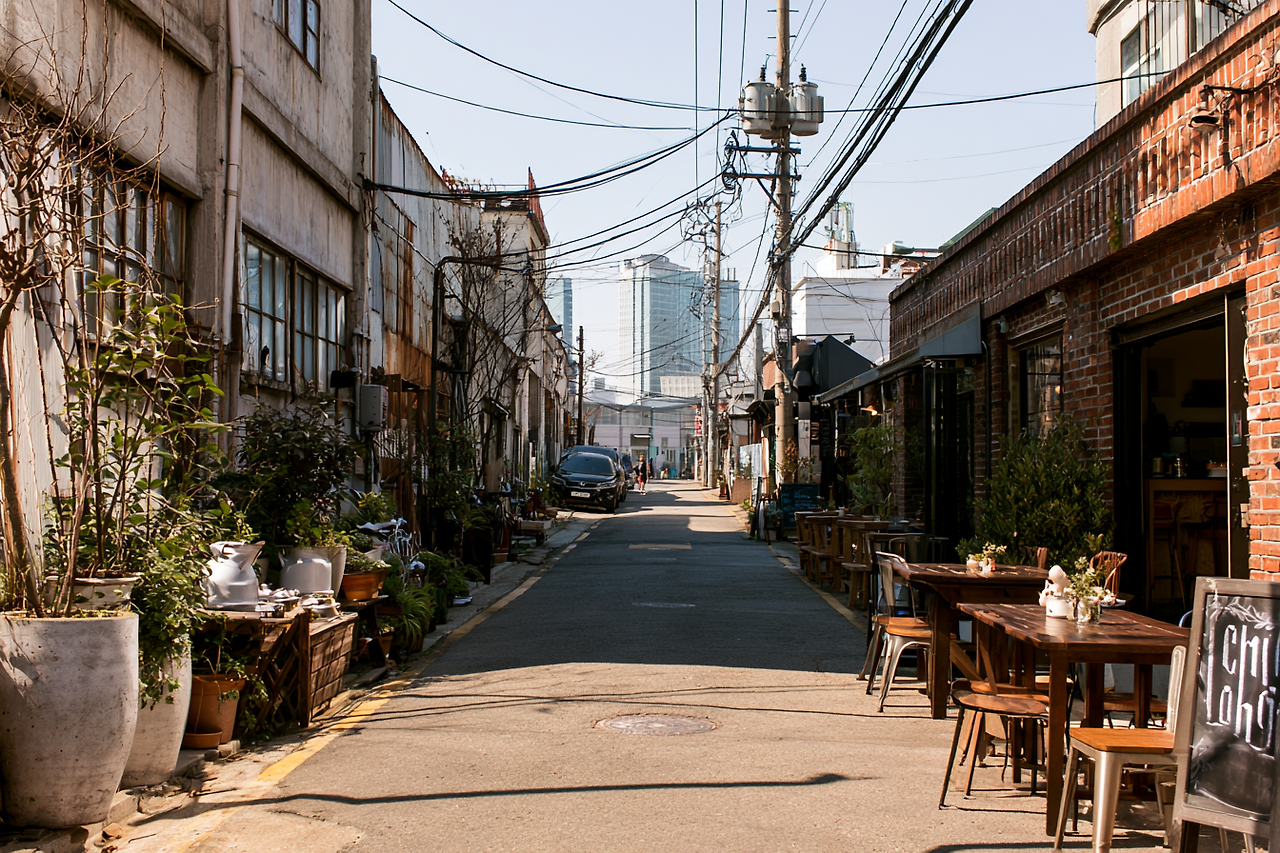
These days I turn the question around. If I were a foreigner, what would astonish me most in my own neighborhood in Seoul? I try to look at what the locals have gone numb to with an outsider's eye, and to see my own country that way again. The streets changing overnight, the generations cut off from one another, identity trembling in the age of AI. Frank loved America and still looked at it critically; I want to love this place and still be honest about the tensions inside it. Strangeness is something the body knows before the head does.
The change has reached my AI work as well. I no longer chase only the crisp, flawless image. I put feeling before polish and story before perfection. As Frank accepted the coarse grain of film, I accept the smudges and errors AI produces as a new kind of expression. Last year at Paris Photo I watched a gallery exhibit AI images that had come out "wrong." Standing before that courage, I thought again about what makes an artist. What you discard as failure and what you embrace as expression — that choice is what makes the work yours.
Frank never staked everything on a single frame. The Americans is eighty-three photographs bound into one book — a series. That point carries straight into my teaching. To the photographers who come to learn AI and Midjourney, I say: do not cling to the one image. Build a story of at least ten. Finish one ten-image portfolio every quarter. A dazzling single AI image fades; a series that carries a story stays.
And I tell them one thing more. Do not try to shoot well. Try to shoot true. Perhaps that is a strange thing to hear from a man who chased precision for forty years. But it was Frank's rough eighty-three that taught it to me. If a stranger arriving today looked down the street you pass every morning, what would look strangest to them? And standing before that strangeness — would you try to make a good photograph, or an honest one?